
- By: vishalultrasound
- July 22, 2026
Urgent DVT Assessment with a Private Vascular Scan in Wembley
A sore calf after exercise is common. Some swelling after a long day on your feet can be too. But leg swelling after a long flight or major surgery that shows up without any obvious reason is worth getting checked rather than waiting to see if it settles. A vascular ultrasound in Wembley is a quick and easy method to view the movement of blood in the body’s veins and arteries and enables the identification of any underlying disease such as DVT.
It really makes a big difference if you are checked on time, especially if you have recently experienced sudden symptoms. At Vishal’s Ultrasound Diagnostic Centre, our team provides prompt, high-quality vascular imaging in a comfortable setting, so patients get a timely diagnosis and a clear idea of next steps.
When Should You Consider a Vascular Ultrasound in Wembley?
Your blood vessels have an essential part to play in the transportation of blood throughout your body. If there is a problem in any of your veins or arteries, then your body will usually give you some indication of this, which needs to be addressed.
You may need to arrange for a vascular ultrasound Wembley if you experience any of the following:
- Swelling in one leg, which appeared unexpectedly
- Pain in the calf not related to an injury
- An area of redness or warmth on the leg
- Varicose veins that feel uncomfortable or heavy
- A sensation such as numbness or tingling, which suggests that your circulation may not be normal
- Ongoing pain in the leg that does not go away when you rest
None of these symptoms necessarily suggests that there is something seriously wrong; however, they do all warrant medical investigation.
What Is a Vascular Ultrasound and How Does It Help Diagnose DVT?
Vascular ultrasound is an advanced diagnostic method that applies sound waves of high frequency to examine blood vessels and their blood flow. The procedure does not require any radiation exposure, and thus, is considered relatively safe for different patients.
If DVT is suspected, the imaging study focuses on deep veins, typically located in the legs, to detect any clots obstructing the normal blood circulation process.
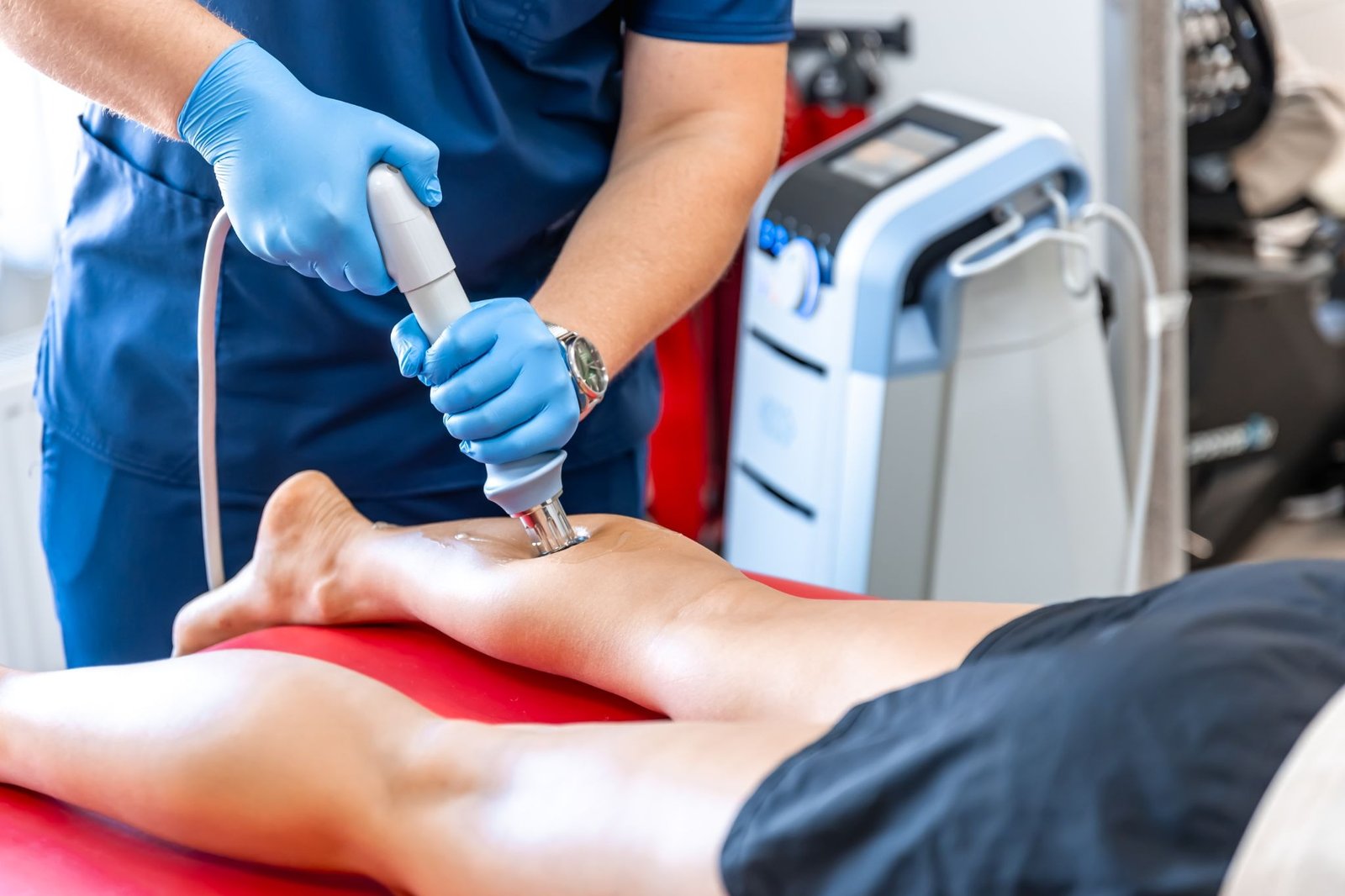
The procedure itself is straightforward and painless. A sonographer puts a small amount of gel on the skin and guides a handheld probe over the area being examined to produce live images. Most scans take somewhere between 30 and 45 minutes, depending on what needs to be looked at.
Given how accurate and safe it is, vascular ultrasound is usually the first imaging test recommended when DVT or another circulation problem is suspected.
Who Is More Likely to Develop DVT?
DVT can affect anyone, but certain factors do raise the likelihood of developing a clot.
Some of the more common risk factors include:
- Extended periods of immobility- after surgery, for instance, or during long-haul travel
- Pregnancy and the weeks following childbirth
- Getting older
- Obesity
- Smoking
- A personal or family history of blood clots
- Certain medical conditions that affect how blood clots
- Hormonal medications, including some contraceptives and hormone replacement therapy
Having one or more of these risk factors doesn’t mean you’ll develop DVT. But if symptoms do appear, it’s important to take them seriously rather than dismiss them. A vascular scan Wembley assessment at Vishal’s Ultrasound Diagnostic Centre can give you.
What Happens During a Private Vascular Ultrasound Appointment?
If you haven’t had an ultrasound at Vishal’s Ultrasound Diagnostic Centre before, it’s natural to want to know what you’re walking into.
You’ll be given any preparation instructions beforehand, though most vascular ultrasounds need very little, if any, preparation on your part.
During the scan, you’ll lie comfortably while the sonographer applies a clear gel to the area being examined. A handheld probe moves across the skin to produce live images of your blood vessels and the flow within them. It’s completely painless, and if anything concerns you or you have questions during the appointment, you can raise them with the sonographer at any point.
Once it’s done, you can go straight back to your normal day; there’s no recovery period.
Why Choose Vishal’s Ultrasound Diagnostic Centre for Your Vascular Scan?
Who carries out your imaging matters. A reliable, experienced provider makes the whole process considerably less stressful.
At Vishal’s Ultrasound Diagnostic Centre, patients have access to:
- Experienced sonographers with specific expertise in vascular imaging
- High-quality ultrasound technology that produces detailed, reliable assessments
- Private appointments in a professional and genuinely welcoming environment
- Prompt reporting so that clinical decisions aren’t held up
- A convenient Wembley location with a patient-first approach throughout
Whether a healthcare professional has referred you for further investigation or you’re dealing with symptoms that concern you, the team is focused on providing accurate imaging alongside care that actually feels like care.
Early Diagnosis Can Make All the Difference
Leg pain or swelling doesn’t always point to a blood clot. However, if you experience chronic symptoms or have unexpected signs, it’s better not to delay scheduling an appointment. With a vascular ultrasound Wembley test, you will be able to determine any circulatory system issues, dismiss any serious illnesses, such as DVT, and provide your doctor with valuable information.
In case you are searching for a private ultrasound Wembley service, Vishal’s Ultrasound Diagnostic Center will be happy to provide you with quality imaging services and help you move from uncertainty to diagnosis as fast as possible.
1. Is a vascular ultrasound able to detect DVT?
Yes, because it is mainly used to diagnose it and examine the blood flow through your veins.
2. Is a vascular ultrasound painful?
No. Neither invasiveness nor any pain is involved in the procedure. Pressure from the probe is the only sensation that may occur during the examination.
3. What is the duration of a vascular ultrasound examination?
The examination takes about 30 – 45 minutes.